How IKV CBSE School Implements NEP 2020 in Classrooms
Education in India is transforming faster than ever before. The National Education Policy (NEP) 2020 is not just another reform—it’s a complete shift in how schools approach teaching and learning. Parents often ask: “How will this affect my child, especially in the early years of schooling?”
In this guide, we’ll break down how IKV CBSE School is bringing NEP 2020 to life in classrooms. From kindergarten education to secondary school, you’ll see practical examples of how policies are shaping real student experiences. We’ll also explore case studies of how experiential learning works in practice, so you can understand how your child benefits every day.
What Makes NEP 2020 Different?
NEP 2020 is the first major education reform in 34 years. Unlike the old exam-heavy, textbook-driven approach, this policy:
- Focuses on creativity, skills, and problem-solving
- Introduces the 5+3+3+4 structure instead of the old 10+2
- Prioritizes early childhood education (ages 3–6)
- Encourages experiential learning over rote memorization
For parents, this means your child’s schooling is no longer just about scoring marks—it’s about building a foundation for lifelong learning.
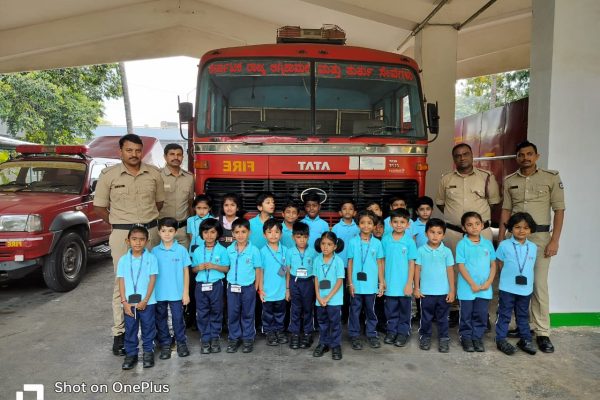
How IKV CBSE School Aligns with NEP 2020
IKV CBSE School is one of the institutions that has adapted NEP 2020 in practice. The school has restructured its approach in the following ways:
- Kindergarten education as a formal foundation
- Activity-based and experiential learning at all levels
- Bilingual and multilingual support for early grades
- Digital classrooms and smart tools integrated into lessons
- Skill-based projects and vocational exposure starting from middle school
Kindergarten Education: The Foundation Stage
The NEP 2020 clearly states that the first five years (ages 3–8) are the most critical for a child’s development. IKV recognizes this and has:
- Introduced play-based learning in kindergarten classrooms
- Created storytelling corners, activity labs, and outdoor play zones
- Designed lessons around real-life experiences (e.g., counting fruits in the garden instead of just numbers on paper)
- Case Study: Learning Numbers Through Gardening
Instead of memorizing numbers from books, IKV’s kindergarteners grow plants in small pots. They count seeds, track plant growth, and record changes in a journal. This way, they learn math, science, and responsibility—all in one activity.
This shows how kindergarten education at IKV CBSE School directly implements experiential learning NEP principles.
The Preparatory Stage: Grades 3–5
At this level, IKV emphasizes curiosity-driven learning. For example:
- Science is taught with hands-on experiments like making simple circuits.
- Language lessons include bilingual storytelling (English + regional language).
- Students engage in group projects to build teamwork and leadership.
Here, NEP’s vision of multilingual learning and cross-subject integration becomes reality.
The Middle Stage: Grades 6–8
IKV’s middle school aligns with NEP 2020 by:
- Introducing coding and digital literacy from Grade 6
- Offering vocational training modules (gardening, carpentry, basic entrepreneurship)
- Moving away from textbook-only teaching toward project-based learning
- Case Study: Coding Meets Art
Students in Grade 7 designed simple animations to showcase Indian festivals. This merged technology (coding) with culture and creativity, proving that learning doesn’t need rigid subject boundaries.
The Secondary Stage: Grades 9–12
The secondary stage prepares students for higher education and real-world careers. At IKV:
- Students can choose flexible subject combinations (Science + Arts + Commerce crossover)
- Assessments focus on critical thinking and application rather than memorization
- Career guidance sessions help students explore multiple pathways
Top 5 Benefits of Concept-Based Learning
How Teachers Are Trained for NEP
Implementing NEP requires teacher training. IKV invests heavily in:
- Workshops on experiential learning techniques
- Digital teaching tools for hybrid classrooms
- Regular peer-learning sessions where teachers share best practices
This ensures that every teacher is well-prepared to bring NEP to life.
Technology Integration in Classrooms
IKV classrooms are equipped with:
- Smart boards and tablets
- Access to online learning platforms
- Blended learning models combining physical and digital activities
This aligns with NEP’s emphasis on technology in CBSE schools and ensures students stay future-ready.
Parent Involvement in NEP Implementation
NEP 2020 emphasizes the role of parents as partners in education. At IKV, parents are encouraged to:
- Participate in learning workshops
- Join open-classroom days to see experiential learning in action
- Support skill-building activities at home
Challenges in Implementation
While IKV has embraced NEP, challenges still exist:
- Balancing traditional exam requirements with new skill-based learning
- Ensuring equal access to digital tools for all students
- Bridging the language divide in multilingual classrooms
Despite these hurdles, IKV continues to refine its practices, setting an example for other CBSE schools.
Why This Matters for Your Child

Conclusion
The NEP 2020 in practice at IKV CBSE School shows how policies can move beyond paperwork and into classrooms. By focusing on kindergarten education, experiential learning, technology integration, and flexible subject choices, IKV is preparing students for a future where adaptability matters as much as academic success.
For parents, this means peace of mind—knowing your child is in an environment where curiosity is celebrated, skills are nurtured, and education is future-proof.
FAQs
How does NEP 2020 change kindergarten education?
It makes early childhood education (ages 3–6) part of the formal school structure, focusing on play-based and experiential learning.
How is IKV implementing NEP in CBSE schools?
IKV integrates play-based kindergarten lessons, vocational training, coding, bilingual learning, and digital classrooms as part of NEP in practice.
What role do parents play in NEP 2020?
Parents are encouraged to partner with schools by supporting skill-building activities, attending workshops, and encouraging curiosity at home.
Will my child still have exams under NEP?
Yes, but they are designed to be competency-based, focusing on application of knowledge rather than rote memorization.